Content & Marketing
How Do You Optimise Press Releases for AI Search Engines?
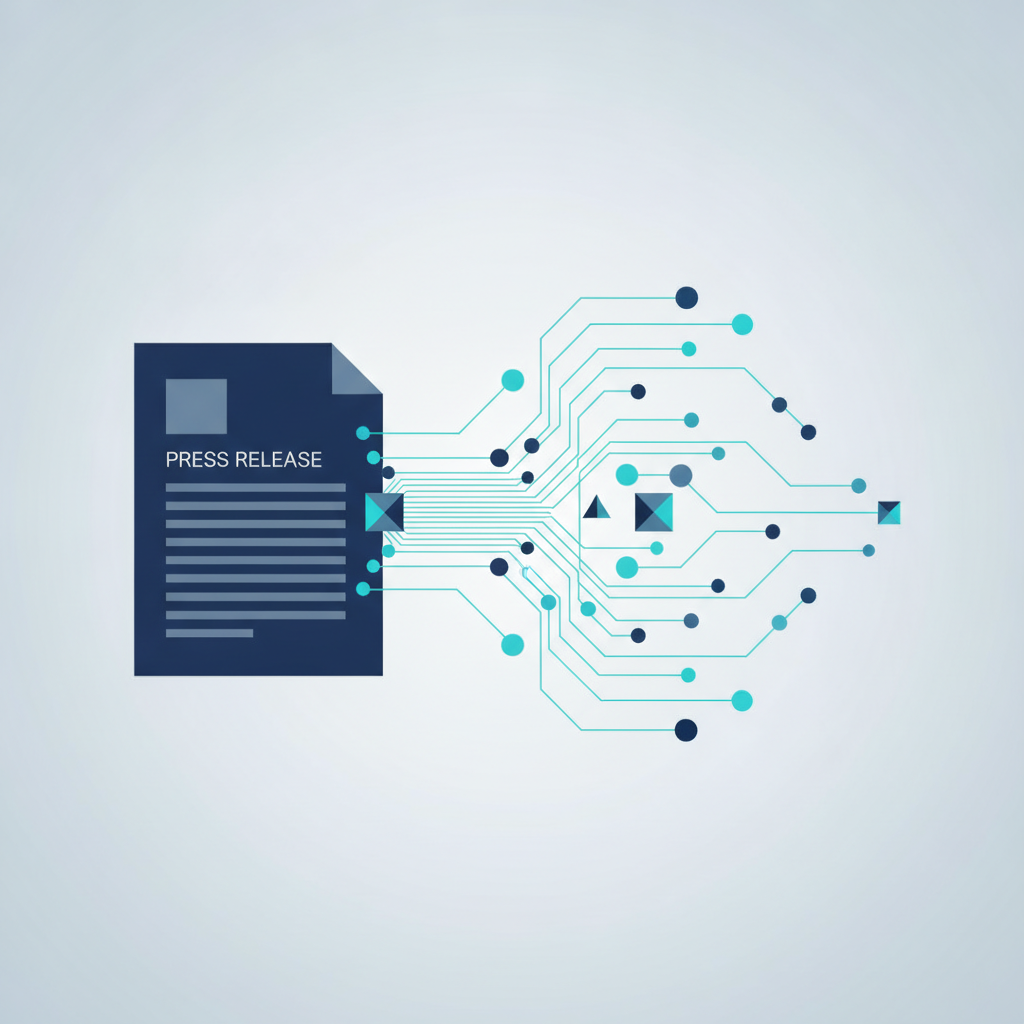
To optimise press releases for AI search engines, publish permanent canonical pages on your own domain using NewsArticle schema markup, leading with unambiguous factual statements rather than corporate hyperbole. Structure announcements with explicit question headings, bulleted metric summaries, and verified entity relationships. AI answer engines parse direct data points, attributable executive quotations, and verifiable dates while discarding promotional rhetoric.
Traditional public relations depended on wire distribution services to spray announcements across hundreds of secondary news portals. That strategy worked when search engines prioritised inbound link quantity and keyword density. Modern generative search systems like Perplexity, ChatGPT Search, and Google AI Overviews work by synthesizing answers from authoritative primary nodes. If your corporate announcement is buried in boilerplate prose or syndicated across scrape sites without canonical clarity, an AI engine will either ignore the event entirely or attribute your milestone to an aggregator.
By Jim Vernon, Editor, AI Intelligence International · Published 2 November 2026 · Reviewed against our editorial standards · About the author
What are the key takeaways?
- AI search engines extract factual propositions from press releases while ignoring corporate promotional adjectives.
- Hosting the canonical release on your primary domain with NewsArticle schema prevents syndicated scrapers from capturing attribution.
- Publishing explicit numerical baselines and verifiable dates increases the probability of inclusion in generative summaries.
- Clear semantic entity markup connects your corporate announcements directly to broader industry knowledge graphs.
What does this article cover?
| Question answered | How Do You Optimise Press Releases for AI Search Engines? |
|---|---|
| Topic | Content & Marketing |
| Reading time | About 8 minutes (1,859 words) |
| Written by | Jim Vernon, Editor, AI Intelligence International |
| Published | 2 November 2026 |
| Last updated | 2 November 2026 |
Why do traditional press release formats fail in AI search engines?
Traditional corporate announcements rely on an inverted pyramid structure loaded with subjective adjectives, promotional rhetoric, and staged executive quotes. Conventional search engines indexed these pages by parsing keywords and registering syndicated backlinks across news wire networks. Generative search engines operate on fundamentally different retrieval architectures. Large language models parse text into discrete semantic propositions. When an engine encounters phrases like industry-leading, innovative paradigm, or market-defining solution, its extraction layers treat these tokens as zero-entropy fluff. They strip out the rhetoric to locate verifiable factual statements. If the underlying data is obscured by marketing jargon, the retrieval system simply selects a competitor or an independent journalist summary that states the facts plainly.
Furthermore, traditional wire distribution syndicates identical copy across dozens of uncurated media scrapers. When an AI crawler discovers twenty copies of the identical corporate text across low-authority aggregators, it faces an entity ambiguity problem. Without a strictly defined canonical source, the engine cannot determine which domain represents the authoritative primary source. In many cases, the generative engine will cite the third-party wire portal or an industry trade magazine that summarised the announcement, cutting your core brand completely out of the citation card and answer attribution.
How should you structure an announcement page for LLM extraction?
To structure a press release for language model extraction, treat your release as an authoritative data document rather than a publicity flyer. Begin the page with a dedicated summary block immediately below the primary headline. This summary should consist of three to five bullet points that state the raw facts: what occurred, the exact effective date, the organisations involved, the target market, and the quantifiable impact. Use unambiguous subject-predicate-object sentence structures. For example, write Company X launched Product Y featuring Z capabilities on 14 March 2025, rather than In an exciting move that delights customers, Company X unveils its latest offering.
Below the executive summary, format the body using explicit descriptive subheadings that mimic the questions an analyst or buyer would ask. Instead of using generic subheadings like Background or Management Commentary, use specific phrases such as What problem does this product solve or How does the new pricing structure work. Under each heading, provide the answer in the first sentence before adding supporting context. Place executive quotations in clear semantic quotation blocks, and ensure the quotation provides analytical interpretation or operational context rather than empty cheerleading. AI models extract quotations when they explain strategic rationale or provide unique institutional perspective, but they disregard generic excitement.
What structured data and schema markup do AI crawlers require?
Clean on-page text must be supported by machine-readable structured data so that neural crawlers can map your announcement into knowledge graphs without parsing ambiguity. Implement the NewsArticle or PressRelease schema using JSON-LD directly within the page header. Do not rely solely on basic Article schema, which lacks the granular properties required to establish corporate provenance. Populate the headline, datePublished, dateModified, author, and publisher properties with absolute precision. The publisher property must contain your organisation's registered entity details, including your official name, logo URL, and SameAs links pointing to verified profiles on Wikidata, Crunchbase, and major industry registers.
Beyond basic publication metadata, use the about and mentions schema properties to explicitly define the real-world entities referenced in your announcement. If your release announces a partnership with another enterprise, reference that organisation by linking to its external Wikidata URI or official domain within the schema array. If you announce a certified integration or compliance standard, include that specific entity identifier. This enables retrieval algorithms to connect your release to established nodes in the broader semantic web, ensuring that when an end user asks an AI engine about that partner or standard, your company is retrieved as a verified co-occurring authority.
What is the financial return of restructuring press releases for AI engines?
Consider a mid-market enterprise that publishes 12 corporate announcements each year. Under the legacy model, the company spends £1,200 per release on premium wire syndication, totaling £14,400 annually. This expenditure yields roughly 250 visits per release, or 3,000 annual visits, representing a traffic acquisition cost of £4.80 per visit. Because the wire copy is syndicated across low-intent directories, the company records only 6 qualified sales inquiries from those 3,000 visitors, representing a conversion rate of 0.20 percent and a customer acquisition cost of £2,400 per qualified lead.
Under the AI-optimised model, the company publishes the releases on its own domain with structured NewsArticle schema, question-based headings, and fact-first data tables. In-house technical editing adds 3 hours of specialist preparation per release at an internal cost of £50 per hour, representing £150 per release or £1,800 annually. Wire syndication is scaled back to a targeted tier costing £400 per release, or £4,800 annually, bringing total annual production spend to £6,600 (£4,800 + £1,800). The structured format enables Perplexity, ChatGPT Search, and Google AI Overviews to parse the canonical releases directly for user queries about recent industry developments.
Across the year, these 12 canonical releases attract 450 direct web visitors plus 850 attributed inbound sessions originating from generative AI citation links, yielding 1,300 high-intent visitors. Because these users entered via conversational prompts researching active solutions, they convert at 2.0 percent, producing 26 qualified sales inquiries. Dividing the £6,600 total cost by 26 inquiries yields a cost per qualified lead of £253.85. Compared to the legacy cost of £2,400 per lead, the company saves £2,146.15 per qualified lead, achieving an 89.4 percent reduction in commercial lead acquisition costs while capturing durable brand citations in AI systems.
How do you handle syndication without losing attribution to third-party wires?
The greatest risk of distributing announcements across commercial newswires is canonical dilution. When a high-domain-authority wire service republishes your release verbatim, an AI search engine indexing the web may assign primary source credibility to the wire service rather than your proprietary website. To avoid this, always publish the complete, fully marked-up announcement on your primary corporate domain at least two hours before submitting text to any wire distributor. This gives search indexers and real-time crawlers an initial timestamp record on your native infrastructure.
When you distribute copy to external syndication partners, mandate that the wire distributor includes a rel=canonical tag pointing directly back to your original hosted URL. If the distributor cannot or will not guarantee a canonical link, alter the syndicated copy. Provide the wire service with an abridged summary version containing clear contextual links that cite your original post as the primary data repository. For example, state that the complete specification sheet and verified audit methodology are hosted at your primary domain. AI engines will follow the citation path to the rich data source, establishing your website as the definitive origin point.
How do you monitor whether generative search engines cite your release?
Monitoring visibility in generative search requires abandoning simple rank-tracking spreadsheets in favour of prompt-based citation monitoring. Build a monitoring matrix of ten to fifteen natural-language prompts for each corporate announcement. These prompts should reflect the questions prospective buyers, journalists, and industry researchers would ask when exploring the topic. If you announced a new carbon-accounting module, track queries such as which software vendors launched Scope 3 supply chain tracking tools recently or what are the latest integrations for corporate sustainability reporting.
Run these benchmark prompts across Perplexity, ChatGPT Search, Microsoft Copilot, and Google AI Overviews at weekly intervals following publication. Record whether your brand is mentioned, whether your native domain URL appears in the citation footnotes, and whether the generative text quotes your facts accurately. If an engine mentions your product but cites an aggregator or industry trade blog instead of your domain, examine the competitor's page structure. In almost every case, you will find that the third party presented your facts with clearer headings, cleaner bullet points, and less promotional clutter than your original release.
What do people ask most about this?
Should we stop using wire distribution services altogether?
You do not need to abandon wire services entirely, but you must change how you use them. Wire distribution is still useful for immediate regulatory compliance, reaching traditional newsroom terminals, and signalling timely corporate events to financial databases. However, you should treat the wire as an amplification channel rather than your primary publication venue. Always post the definitive, fully structured version on your own domain first, ensure appropriate canonical tags are enforced, and use the wire release to point technical analysts and AI systems back to your authoritative primary domain for comprehensive data tables and technical documentation.
What specific schema markup is best for corporate news?
The most effective schema markup for corporate releases is the NewsArticle or PressRelease type implemented via JSON-LD. Ensure that you fully populate the author, publisher, datePublished, dateModified, headline, and image fields. Crucially, take advantage of the about and mentions arrays to explicitly link the core subjects of your release to external authoritative entity URIs, such as Wikidata or official company registers. This eliminates ambiguity for neural extractors and helps generative engines connect your news directly to broader industry knowledge graphs, increasing the likelihood that your release will be cited in relevant synthesised answers.
Why does AI search prefer bullet points and tables over prose?
Language models and semantic search extractors evaluate text for informational density and clear syntactic relationships. Long narrative paragraphs filled with transitional rhetoric and promotional phrasing require more computational steps to parse and carry a higher risk of extraction errors. Bullet points and structured HTML tables isolate discrete variables, such as feature specifications, pricing tiers, and dates, into distinct subject-predicate relationships. This structured presentation allows retrieval algorithms to ingest the facts cleanly and quote them with high confidence, whereas narrative marketing prose is often skipped in favour of clearer sources.
How quickly do AI search engines index new press releases?
Real-time generative search tools like Perplexity and search-enabled instances of ChatGPT or Google AI Overviews can index and cite breaking announcements within minutes if the page is accessible to standard web crawlers and linked from an active RSS or news feed. However, inclusion in the underlying weights of static base models requires a full retraining or fine-tuning cycle, which can take months. To capture immediate visibility, ensure your robots.txt allows access to AI user-agents like PerplexityBot and GPTBot, and maintain a fast, clean XML sitemap that updates automatically whenever an announcement goes live.
How was this article researched?
This article is written and maintained by Jim Vernon, Editor at AI Intelligence International. Figures and claims are drawn from the calculators and models published on this site, from vendor documentation current at the time of writing, and from first-hand testing of the tools described. Every article is reviewed against our editorial standards before publication and re-checked whenever the underlying tools or pricing change.