Developer & Tech
How Do You Migrate Vector Embeddings Without Application Downtime?
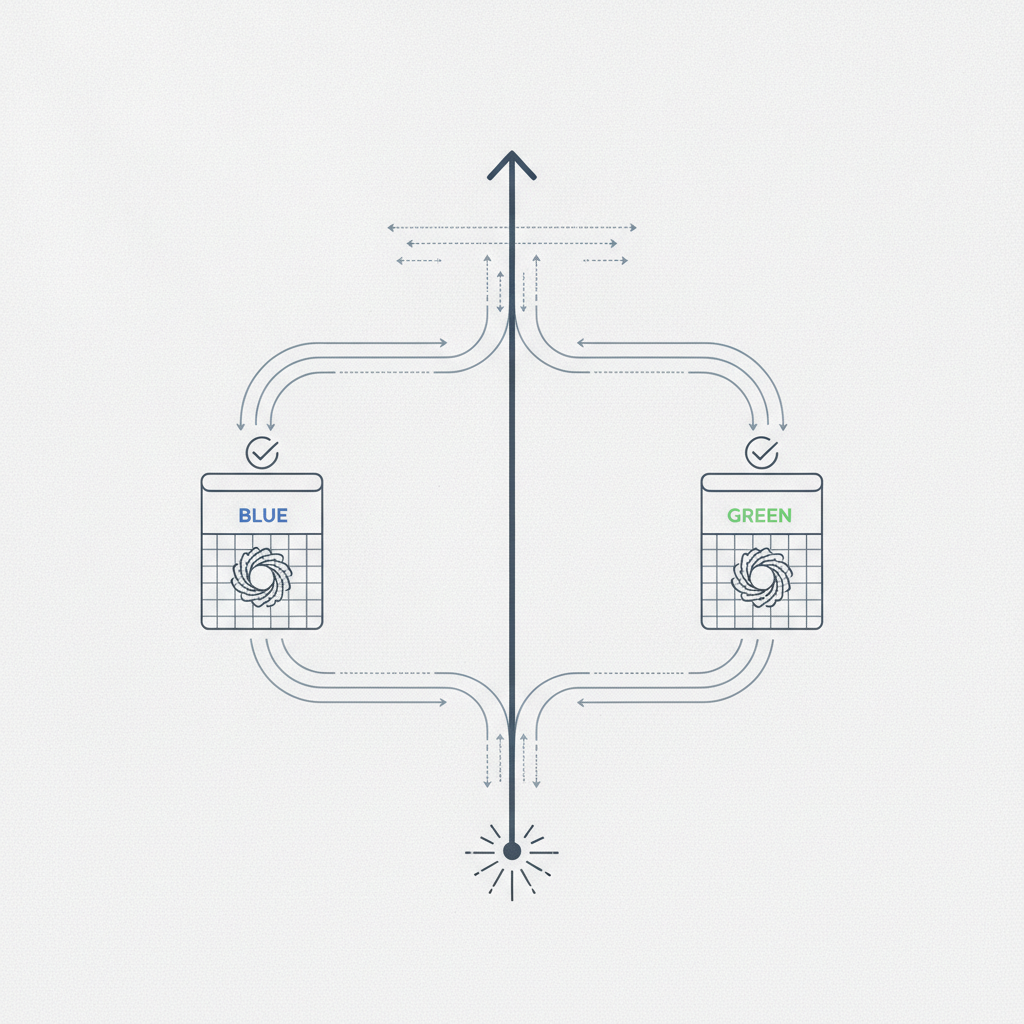
You migrate vector embeddings without downtime by using a blue-green index deployment paired with temporary dual-writing. You spin up a parallel vector collection configured for the new embedding model, dual-write all incoming updates to both old and new collections, backfill historical documents asynchronously in bounded batches, validate retrieval quality using shadow reads, and atomically swap query routing to the new collection before deprecating the legacy index.
Upgrading embedding models is inevitable as retrieval-augmented generation pipelines evolve. Frontier providers regularly publish more capable, cheaper, or higher-dimension embedding architectures, while internal teams often tune open-weights models on domain data. Because vector spaces across disparate models are geometrically incompatible, you cannot run mixed similarity searches or transform vectors in place without degrading retrieval precision.
By Jim Vernon, Editor, AI Intelligence International · Published 20 October 2026 · Reviewed against our editorial standards · About the author
What are the key takeaways?
- Vector spaces are mutually incompatible, meaning documents embedded under different models cannot share a single search index.
- Zero-downtime migration demands dual-writing new records to both old and new collections before starting any backfill process.
- Backfill rate limits must be calibrated against token quotas and target database write capacities to avoid starving production queries.
- Shadow querying allows you to evaluate retrieval latency and recall on live production traffic before cutting over user traffic.
What does this article cover?
| Question answered | How Do You Migrate Vector Embeddings Without Application Downtime? |
|---|---|
| Topic | Developer & Tech |
| Reading time | About 6 minutes (1,380 words) |
| Written by | Jim Vernon, Editor, AI Intelligence International |
| Published | 20 October 2026 |
| Last updated | 20 October 2026 |
Why do vector migrations require a complete re-indexing?
Unlike traditional database migrations where you can alter table columns or add lightweight indexes in place, embedding spaces are mathematically non-transferable. Every embedding model maps textual semantics into a unique geometric coordinate space. Even when two models share the exact same output dimension, such as 1536 dimensions, the directional vectors they assign to identical phrases point in completely different geometric directions. Calculating the cosine similarity between an old vector and a new vector produces mathematically meaningless noise.
Consequently, partial or gradual in-place updates inside an active collection will silently corrupt search results. If your application queries an index populated by a mixture of legacy and updated embeddings, nearest-neighbour algorithms will retrieve arbitrary chunks, degrading generation accuracy and causing hallucinations. The entire document corpus must be converted to the new coordinate space within an isolated, dedicated index before live search traffic interacts with the new model.
How do you set up the blue-green indexing architecture?
A reliable zero-downtime migration mirrors the blue-green deployment strategy commonly used for mission-critical web services. Your blue environment consists of the existing vector index running the legacy embedding model, which continues serving all live customer queries and absorbing live writes. The green environment is an entirely separate vector collection provisioned in your vector database, configured with the dimension and distance metrics required by your replacement model.
Before writing any historical data to the green collection, you modify your ingestion pipeline to implement dual-writing. Whenever an application event creates, edits, or soft-deletes a document, the ingestion worker immediately dispatches two embedding jobs: one using the legacy model destined for the blue collection, and one using the new model destined for the green collection. Establishing dual-writing first guarantees that the new index stays synchronised with real-time application activity throughout the entire backfill duration.
How should you plan and calculate the historical backfill?
Backfilling historical data requires strict resource budgeting to prevent rate-limit throttling or unexpected API expenses. Suppose your knowledge base holds 1,000,000 document chunks averaging 400 tokens per chunk, representing 400,000,000 total tokens. If migrating to an embedding model priced at $0.02 per 1,000,000 tokens, the raw re-embedding expenditure equals exactly $8.00. However, operational constraints such as provider rate limits and vector write ingestion ceilings dictate real-world migration velocity.
If your provider account allows a throughput limit of 5,000,000 tokens per minute, your script should target an operational ceiling of 80 percent of capacity to prevent 429 rate-limit errors on production traffic. At an effective throughput of 4,000,000 tokens per minute, your worker can process 10,000 chunks per minute, or roughly 166.67 chunks per second. Processing 1,000,000 chunks at 10,000 chunks per minute requires 100 minutes of continuous backfill execution. Bounding your batch requests to 50 chunks per API call means issuing 20,000 total batch requests, which your asynchronous job queue can coordinate with automated exponential backoff.
How do you track migration state and prevent data drift?
During a long-running backfill, database writes and transient network partitions can create subtle discrepancies between the legacy and replacement collections. You must persist migration state inside a durable relational store, tracking every document chunk by its unique primary key, a content hash, and an embedding version status flag. If a document is updated by a user while the backfill worker is processing that same document, relying on immutable version timestamps prevents overwriting fresh data with stale backfilled vectors.
A reliable backfill worker processes records ordered by deterministic primary keys rather than arbitrary database queries. The worker checks whether a document already bears the target embedding version in the tracking database. If the dual-write pipeline already wrote the newest vector to the green index during real-time ingest, the backfill worker cleanly skips that record. Once the backfill iterator finishes, a reconciliation query scans for missing primary keys between the two stores to guarantee 100 percent data parity before cutover.
How do you run shadow reads to validate retrieval quality?
Before pointing user-facing queries to the green collection, you should deploy a shadow read mechanism to measure retrieval performance under live conditions. A shadow read occurs when the query service takes an incoming user request, generates embeddings using both old and new models, searches both indexes, returns the blue result to the user, and logs the green result to an observability pipeline for asynchronous evaluation.
This parallel testing reveals whether the new embedding model introduces unexpected query latency, handles domain-specific vocabulary correctly, and produces stable top-k nearest-neighbour recall. By comparing the reciprocal rank and semantic relevance across 5,000 to 10,000 production queries, engineering teams can verify that the new model actually improves search quality without introducing downstream regressions in retrieval-augmented generation prompts.
How do you execute the cutover and clean up the legacy index?
Once data reconciliation confirms zero drift and shadow reads validate retrieval accuracy, switching production traffic is achieved through a dynamic configuration flag or API gateway route update. The application flips the active read target from the blue collection to the green collection instantly. Because the green collection has been processing dual writes and shadow queries, there is zero cache-warming penalty or query latency spike at the moment of switchover.
Following the cutover, leave dual-writing active for an observation window of 48 to 72 hours. This safety buffer allows you to revert the read flag back to the blue index in seconds if an edge-case failure occurs in production. After the observation period passes without incident, remove the legacy dual-write logic from your ingestion code, release the legacy embedding model credentials, and drop the legacy vector index to reclaim database storage and reduce infrastructure overhead.
What do people ask most about this?
Can you use vector projection or transformation matrices instead of re-embedding?
While academic research demonstrates that orthogonal Procrustes analysis or affine transformations can align differing vector spaces to a moderate degree, linear projection almost always causes measurable retrieval degradation in production. The semantic nuances captured by distinct tokenisers, attention mechanisms, and training objectives cannot be mapped linearly without losing fine-grained conceptual distinctions. For applications requiring reliable document recall, re-embedding the raw text corpus remains the industry standard.
What happens to documents deleted during the backfill process?
When a user deletes a document during an active backfill, the deletion event must be dispatched to both the blue and green collections simultaneously via the dual-write pipeline. Furthermore, the deletion must update the state-tracking table by marking the record as soft-deleted or removing it entirely. When the asynchronous backfill worker eventually encounters that record id, it inspects the state table, detects the deletion status, and skips processing, preventing deleted documents from being revived in the new index.
How do you handle embedding model versioning inside client applications?
The cleanest pattern is to decouple the embedding model identifier from application code by using dynamic configuration keys stored in environment variables or remote feature management systems. Ingestion and query services should read the active model version and index name at runtime. This configuration permits instant cutover between collections, enables canary rollouts across user cohorts, and allows automated fallbacks to legacy collections if the new model endpoint experiences sudden regional outages.
Does upgrading to a higher-dimension model always increase query latency?
Higher-dimension vectors, such as moving from 1536 to 3072 dimensions, require more memory bandwidth and computational cycles for distance calculations like dot product or cosine similarity. However, modern vector engines mitigate this through hierarchical navigable small world indexing and scalar or binary quantization. In practice, proper index tuning often keeps query latency within 5 to 15 milliseconds, even when doubling vector dimensions, though overall index memory usage will increase proportionally.
How was this article researched?
This article is written and maintained by Jim Vernon, Editor at AI Intelligence International. Figures and claims are drawn from the calculators and models published on this site, from vendor documentation current at the time of writing, and from first-hand testing of the tools described. Every article is reviewed against our editorial standards before publication and re-checked whenever the underlying tools or pricing change.