Developer & Tech
How Do You Implement Model Routing to Balance Quality and Cost in Production?
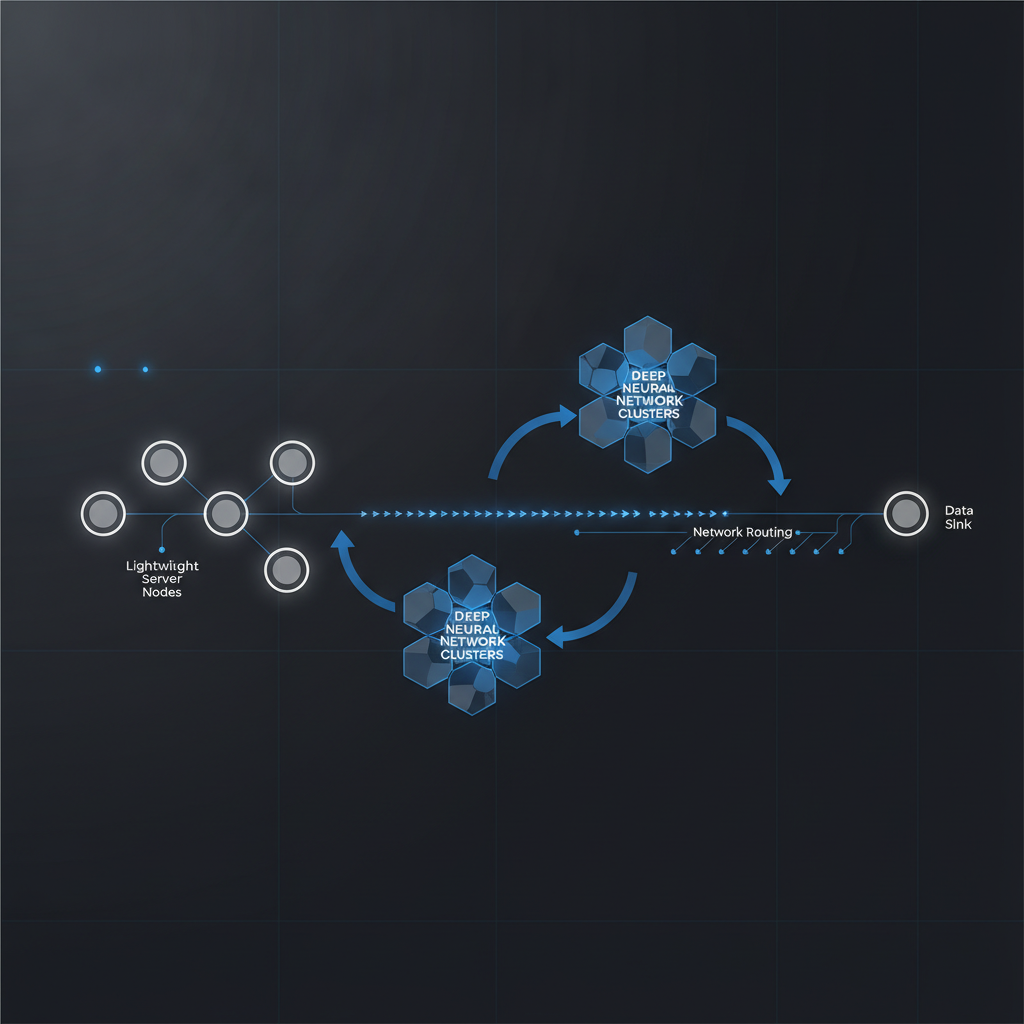
You implement model routing by classifying incoming queries by complexity, intent, and schema requirements before invoking an LLM, directing simple tasks to small, fast models and reserving expensive frontier models for difficult reasoning. A production router relies on lightweight heuristic checks, semantic embeddings, or fast linear classifiers, combined with programmatic output validation to escalate failed responses automatically to higher-tier models without human intervention.
Directing every production request to a frontier model is a common architectural mistake. While frontier models deliver impressive outputs, roughly seventy to eighty per cent of enterprise queries involve routine tasks like formatting, entity extraction, simple summarisation, or classification. Paying top-tier API prices and enduring high token latencies for straightforward transformations drains operational margins. Implementing an automated, deterministic routing layer allows engineering teams to slash API expenditure dramatically while maintaining high evaluation scores across your entire user base.
By Jim Vernon, Editor, AI Intelligence International · Published 28 October 2026 · Reviewed against our editorial standards · About the author
What are the key takeaways?
- Model routing directs user requests to the cheapest model capable of meeting task benchmarks rather than sending all traffic to frontier systems.
- Heuristic and embedding-based classifiers add single-digit millisecond latency while saving more than seventy per cent on downstream token charges.
- Every tiered routing architecture requires automated programmatic verification to escalate malformed responses to stronger models seamlessly.
- Routing decisions must be governed by explicit task taxonomies rather than dynamic generative decisions from another expensive LLM.
What does this article cover?
| Question answered | How Do You Implement Model Routing to Balance Quality and Cost in Production? |
|---|---|
| Topic | Developer & Tech |
| Reading time | About 8 minutes (1,805 words) |
| Written by | Jim Vernon, Editor, AI Intelligence International |
| Published | 28 October 2026 |
| Last updated | 28 October 2026 |
What is model routing and why does static model selection fail?
Model routing is the practice of dynamically assigning incoming prompts to different language models based on the estimated difficulty and nature of the workload. In an unrouted architecture, every query hits a single default model, typically a flagship frontier system chosen during early prototyping to guarantee acceptable outputs. As application volume increases from hundreds of daily requests to hundreds of thousands, this uniform approach creates severe commercial pressure. You end up paying peak pricing for trivial extractions and simple parsing tasks that a model costing a twentieth of the price could complete just as reliably.
Static model selection also fails on system latency. Frontier models are massive, which means their time-to-first-token and overall generation speeds are inherently slower than lightweight, distilled models. When your application sends every request to a massive frontier model, end users endure three-second waiting times for operations that a smaller model could execute in three hundred milliseconds. Balancing user satisfaction against budget requires an intelligent, multi-tier dispatch layer that decouples application logic from specific model providers.
How do you classify incoming requests without adding latency?
The routing layer itself must be exceptionally lean. If your router uses a frontier model to decide which model should handle the user prompt, you introduce unnecessary token expenditure and double your baseline latency. Production routing should instead rely on tiered, low-overhead classification mechanisms. The first pass should always consist of deterministic heuristics: checking message character length, matching known prompt signatures, inspecting metadata, or verifying structured system inputs. These rule-based checks take less than two milliseconds and instantly triage common administrative queries.
For arbitrary natural language queries where heuristics fall short, use a compact embedding model paired with an approximate nearest neighbour index or a small linear classifier trained on historical query logs. By mapping incoming queries to vector clusters representing specific task categories such as data extraction, code generation, creative synthesis, or policy reasoning, you can classify the request in five to fifteen milliseconds. This small latency penalty is recouped immediately when the request routes to a lightweight model that streams responses three times faster than a flagship frontier alternative.
What deterministic rules should govern your routing tiers?
A robust routing architecture typically segregates traffic across three distinct model tiers: fast micro models, capable mid-tier models, and flagship frontier models. Tier one micro models handle narrow tasks with well-defined structural constraints, including intent extraction, sentiment analysis, boolean classification, and structured schema mapping. These tasks require strict adherence to format rather than deep contextual synthesis. You can safely deploy small open-weight models or lightweight hosted endpoints for these operations.
Tier two mid-tier models handle moderate summarisation, conversational drafting, and standard content transformation where contextual nuance matters but multi-step logical deduction is unnecessary. Tier three frontier models are reserved exclusively for complex reasoning tasks, such as generating executable code from ambiguous specifications, performing multi-hop analytical synthesis, or resolving edge-case business logic. Routing rules should remain deterministic: if a query lacks complex reasoning markers and matches a known template, route it to tier one; escalate to tier two or tier three only when specific complexity flags trigger.
What do the cost and latency savings look like in practice?
Consider a concrete worked example based on a customer operations platform processing 100,000 user requests per month. In this system, the average request carries 1,500 input tokens and generates 500 output tokens. Under an unrouted baseline architecture, all traffic routes to a frontier model billed at $2.50 per million input tokens and $10.00 per million output tokens. The baseline cost per request is $0.00375 for input plus $0.00500 for output, totalling $0.00875 per call. Multiplying this across 100,000 monthly queries yields an unrouted total API spend of $875.00 each month.
Now evaluate the same workload across a three-tier routing architecture. Assume that empirical analysis of the query log categorises 60,000 requests as simple extractions and classifications suitable for a lightweight model, 30,000 requests as standard conversational tasks for a mid-tier model, and 10,000 requests as complex analytical problems requiring the frontier model. The lightweight model costs $0.15 per million input tokens and $0.60 per million output tokens, equalling $0.000525 per request, or $31.50 for 60,000 calls. The mid-tier model costs $1.00 per million input tokens and $4.00 per million output tokens, equalling $0.00350 per request, or $105.00 for 30,000 calls.
The frontier model handles the remaining 10,000 calls at $0.00875 per request, equalling $87.50. Adding local router infrastructure overhead at an estimated $0.00005 per request across all 100,000 calls adds $5.00. The combined monthly spend becomes $31.50 plus $105.00 plus $87.50 plus $5.00, which equals $229.00. Implementing dynamic routing reduces the total monthly bill from $875.00 down to $229.00, delivering a net saving of $646.00, or a 73.8 per cent reduction in monthly token expenditure. Furthermore, the 60,000 lightweight requests drop from a 1,100ms average response time to 250ms, noticeably improving end-user responsiveness.
How do you handle fallback routing and verification loops?
Routing to smaller models carries an inherent risk of degraded output quality, hallucination, or schema non-compliance. To maintain production standards, a routing system must incorporate an automated verification loop. When a lightweight model returns an answer, the output should run through fast syntactic validation, such as checking JSON schema conformation, regex constraints, or required key presence. If the tier one model returns an invalid structure or an empty response, the router catches the exception immediately and escalates the prompt to the tier two or tier three model.
For semantic tasks where structural validation is insufficient, you can implement confidence scoring or lightweight cross-checks. If a smaller model outputs a probability score below a predefined threshold, or if an internal classification flags potential ambiguity, the request escalates to the higher tier automatically. Crucially, your system must track these fallback incidents in your operational logs. If a specific prompt category exhibits a fallback rate higher than five per cent, the routing criteria should be adjusted to send that category directly to the higher model tier, preventing redundant double-call latency.
How do you monitor quality drift across routed tiers in production?
Model routing requires constant observational hygiene. Because model providers update underlying weights and API behaviours without warning, a small model that handled a specific task flawlessly last month might begin failing silently following a silent provider rollout. Engineering teams must run continuous shadow evaluations on production logs. By taking a random sample of five per cent of requests routed to tier one and tier two models and running them in the background against frontier baselines, you can track output divergence over time.
Use automated unit evaluations to score consistency across key criteria: factual precision, adherence to instructions, and formatting compliance. If the evaluation score between the cheap model and the frontier model diverges beyond an acceptable tolerance margin, you can update routing weights in real time without shipping application code. Maintaining a centralised configuration registry for model routing parameters lets you divert traffic away from degrading models within seconds, keeping production systems reliable.
What architectural pitfalls should you avoid when deploying a router?
The most dangerous mistake in model routing is over-engineering the classification layer. Introducing complex multi-agent deliberation or running nested LLM calls just to decide which model to invoke creates more points of failure, drives up costs, and bloats overall response times. Your routing layer should be treated like a fast network gateway: stateless, deterministic, and instrumented with strict timeouts. If your classification component does not return a routing decision within thirty milliseconds, your system should automatically fall back to the safe, higher-tier default.
Another critical pitfall is failing to pass shared context and system prompts cleanly between tiers. Different model families respond differently to prompt structures, token formatting, and system directives. If you send the exact same lengthy prompt written for a 128k context frontier model to a compact 8k parameter-optimised model, the compact model may truncate inputs or misinterpret verbose instructions. Ensure your routing framework pairs each model tier with an adapted, tier-specific prompt template that extracts maximum performance from that model's specific architecture.
What do people ask most about this?
Does model routing introduce noticeable latency for users?
When implemented correctly with deterministic rules or lightweight embedding classifiers, model routing adds between five and twenty milliseconds of initial processing time. This tiny overhead is far outweighed by the downstream performance gains. Because lightweight models produce tokens two to four times faster than massive frontier models, routing sixty to eighty per cent of your traffic to tier one or tier two endpoints results in a substantial net reduction in total end-to-end response time for your users.
How do you determine which tasks can safely use smaller models?
You determine task suitability by running structured offline evaluations on historical query logs. Take a sample of several hundred real user queries for a given feature, run them through both your proposed small model and a baseline frontier model, and score the outputs against defined programmatic acceptance criteria. If the small model achieves parity on accuracy, formatting, and safety metrics while cutting costs, the task is marked as suitable for tier one routing.
What happens if an API provider experiences downtime on a routed model?
A resilient routing architecture must incorporate automated failover mechanisms across model providers as well as tiers. If your primary tier one endpoint returns a 500 error, rate limit timeout, or connectivity failure, the router should catch the failure instantly and redirect the payload to an equivalent backup model from a different vendor or escalate directly to the tier two provider, ensuring your end-user application remains fully operational.
Can open-weight models be used alongside commercial APIs in a router?
Yes, combining self-hosted open-weight models with commercial proprietary APIs is one of the most effective production routing strategies. High-volume, privacy-sensitive, or repetitive parsing tasks can be routed to an internally hosted, fine-tuned open model running on your own infrastructure to minimise marginal token costs, while difficult, open-ended user inquiries are dispatched to commercial frontier APIs only when advanced reasoning is required.
How was this article researched?
This article is written and maintained by Jim Vernon, Editor at AI Intelligence International. Figures and claims are drawn from the calculators and models published on this site, from vendor documentation current at the time of writing, and from first-hand testing of the tools described. Every article is reviewed against our editorial standards before publication and re-checked whenever the underlying tools or pricing change.